
Check out the leading manufacturer for professional coil packing solutions here:
—
Title: Exploring Industrial Robot Types: A Comprehensive Guide
Introduction:
In the ever-evolving world of automation, industrial robots have become essential tools for streamlining production processes. From assembly lines to warehouses, these machines have revolutionized various industries, creating more efficient and cost-effective operations. In this YouTube video, we will delve into the different types of industrial robots, with a specific focus on KUKA Robot Motion Types, shedding light on their functionalities, benefits, and applications.
1. Introduction to Industrial Robots:
Industrial robots are programmable machines designed to execute tasks with precision and consistency. They can be categorized into various types based on their configurations, motion capabilities, and applications. Let’s explore some of the most common industrial robot types:
2. Articulated Robots:
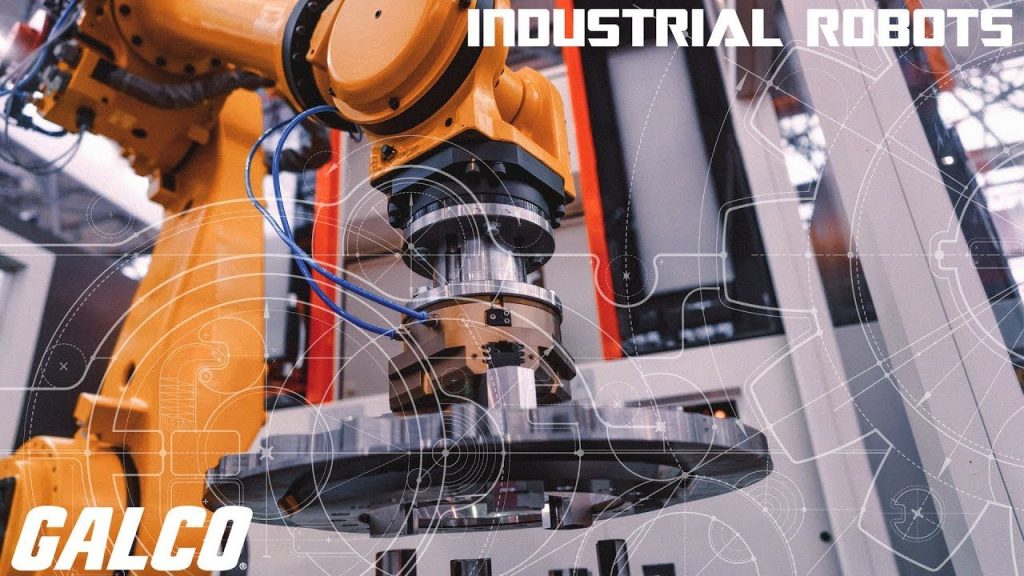
Articulated robots are the most widely used type in industrial settings. They consist of a series of interconnected rotary joints, resembling a human arm. With multi-axis flexibility, these robots can perform intricate movements and reach various points within their work envelope. They excel in tasks such as welding, material handling, and assembly.
3. Cartesian Robots:
Also known as gantry robots or rectilinear robots, Cartesian robots feature three linear joints that enable movement along the X, Y, and Z axes. Their rigid structure ensures high precision and stability, making them ideal for applications requiring accurate positioning, such as pick and place operations and 3D printing.
4. SCARA Robots:
SCARA (Selective Compliance Assembly Robot Arm) robots are designed for high-speed, repetitive tasks in assembly and packaging processes. They have a horizontal joint structure that provides precise movement in the X and Y axes, while the vertical Z-axis remains rigid. SCARA robots are renowned for their exceptional speed, making them suitable for applications like screwdriving, sorting, and inspection.
5. Delta Robots:
Delta robots, also called parallel robots, are known for their incredible speed and agility. They consist of three arms connected to a common base, forming a triangular configuration. These robots excel in tasks requiring rapid pick and place operations, such as packaging, sorting, and food processing.
6. Collaborative Robots:
Collaborative robots, or cobots, are designed to work alongside humans in a shared workspace. Equipped with advanced sensors and safety features, cobots can perform tasks collaboratively or independently. They are widely used in industries where human-robot collaboration is crucial, such as assembly lines, laboratories, and healthcare.
7. KUKA Robot Motion Types:
KUKA is a renowned manufacturer of industrial robots, offering a wide range of motion types to cater to various industry requirements. Some notable KUKA robot motion types include:
– PTP (Point-to-Point): These robots move from one precise point to another, making them suitable for tasks that require accurate positioning, such as welding and painting.
– Linear: Linear robots move along a straight path, offering high speed and repeatability. They are commonly used in assembly lines and material handling processes.
– Continuous Path: Continuous path robots follow a predetermined path, enabling them to perform tasks such as arc welding and spray painting.
– Synchronized: Synchronized robots work in tandem with other robots or machines, ensuring seamless coordination and efficiency in complex manufacturing processes.
Conclusion:
Industrial robots play a pivotal role in the automation and optimization of various industries. Understanding the different types of industrial robots and their motion capabilities is vital for businesses seeking to enhance their productivity and efficiency. Whether it’s the versatility of articulated robots or the speed of delta robots, each type offers unique advantages for specific applications. As technology continues to advance, industrial robots will undoubtedly shape the future of automation, revolutionizing the way we work and produce.
Check out the leading manufacturer for professional coil packing solutions here:
—
Note: For the YouTube video article, it is advisable to include relevant visuals, diagrams, or video clips to enhance the viewer’s understanding and engagement with the content. Industrial Robot
“Exploring the Diversity of Robot Motion Types: Unlocking the Potential of Industrial Robotics”