Check out the leading manufacturer for professional coil packing solutions here:
Industrial robots are crucial components in modern manufacturing systems, as they provide automated and flexible capabilities for a wide range of applications. These robots play a significant role in enhancing efficiency and productivity within the manufacturing industry. In this YouTube video, we will explore the various types of industrial robots and their importance in industrial robotics.
Industrial robots come in different types, each designed to perform specific tasks and functions. These robots can be categorized into six main types: articulated robots, cartesian robots, cylindrical robots, polar robots, delta robots, and SCARA robots. Each type has its unique characteristics and advantages, making them suitable for different manufacturing applications.
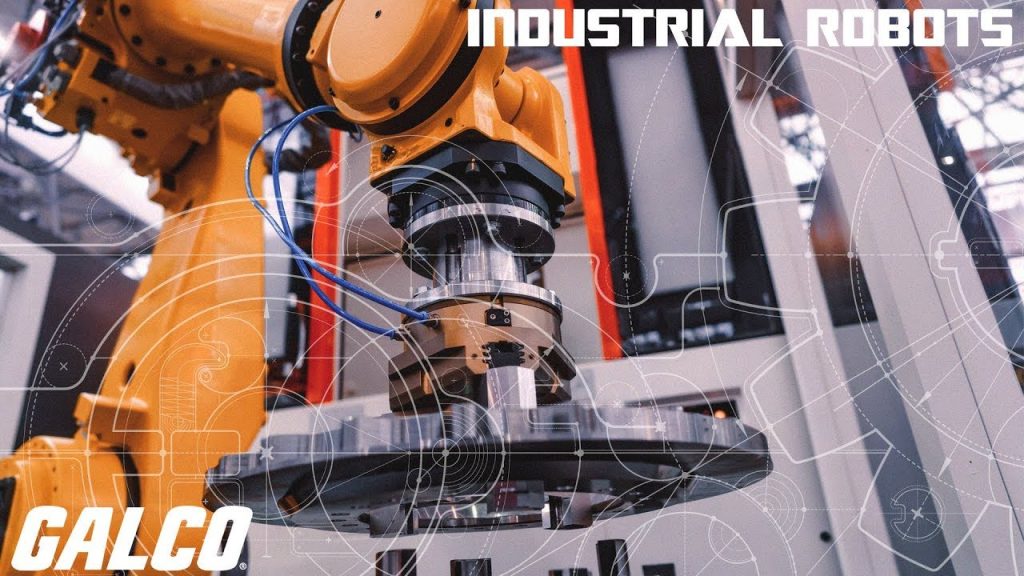
Articulated robots are the most commonly used robots in industrial settings. They consist of a series of interconnected joints, resembling a human arm. These robots offer high flexibility and can perform tasks in various orientations and positions. Articulated robots are commonly used in assembly lines, welding, painting, and material handling.
Cartesian robots, also known as gantry robots, operate on a three-axis system, moving in a linear motion. These robots are highly precise and are often used in applications that require accurate positioning, such as pick and place operations, packaging, and machine tending.
Cylindrical robots have a cylindrical-shaped workspace and are typically mounted on a stationary base. They have a single rotary joint that allows them to rotate in a circular motion. These robots are commonly used for tasks that involve repetitive movements, such as machine loading, unloading, and die casting.
Polar robots, also known as spherical robots, have a polar coordinate system and operate with a combination of rotary and linear movements. These robots are well-suited for applications that require a high range of motion and precision, such as material handling and assembly.
Delta robots are parallel robots that use a series of interconnected parallelograms to achieve movement. These robots are known for their high speed and accuracy, making them ideal for tasks that require rapid and precise motions, such as packaging, sorting, and food processing.
SCARA robots, which stands for Selective Compliance Assembly Robot Arm, have a rigid horizontal arm and a rotary joint at the base. These robots are commonly used for assembly tasks that require both horizontal and vertical movements, such as screwdriving, inserting, and soldering.
Industrial robots have revolutionized the manufacturing industry by improving efficiency, accuracy, and safety. With their ability to perform repetitive tasks tirelessly and with precision, they help reduce human error and increase overall productivity. Furthermore, industrial robots can be easily programmed and reprogrammed to adapt to changing production needs, making them highly flexible and cost-effective solutions.
In conclusion, industrial robots are essential components within manufacturing systems, providing automated and flexible capabilities for a wide range of applications. The different types of industrial robots, including articulated robots, cartesian robots, cylindrical robots, polar robots, delta robots, and SCARA robots, offer unique advantages and functionalities to enhance efficiency and productivity. By incorporating industrial robots into manufacturing processes, businesses can achieve higher levels of automation and optimize their production workflows.
Check out the leading manufacturer for professional coil packing solutions here: [Insert appropriate call-to-action or link here]. Industrial Robot
“Exploring the Evolution and Applications of Industrial Robotics: A Comprehensive Guide to Industrial Robot Types”