
Title: Pallet Wrappers in Industry: Stretch Wrap and Unitize Heavy Loads for Transportation or Storage
Description:
Introduction:
Welcome to our informative video on pallet wrappers in the industry. In this video, we will explore the importance of pallet wrappers, specifically pallet wrapper machines, and their role in efficiently stretch wrapping or unitizing heavy loads for transportation or storage purposes.
Video Content:
1. Understanding Pallet Wrappers:
– Pallet wrappers play a crucial role in industries that deal with heavy loads. They ensure the stability and safety of goods during transportation and storage.
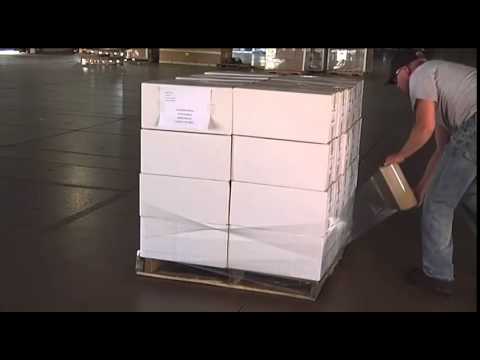
– Pallet wrappers utilize stretch wrap films to tightly secure loads, preventing shifting, damage, and loss.
2. Benefits of Pallet Wrappers:
– Increased Load Stability: Pallet wrapping creates a secure bond, minimizing load movement and reducing the risk of damage during handling or transport.
– Cost Efficiency: By securely unitizing loads, pallet wrappers help optimize space utilization, reducing the need for additional packaging materials and transportation costs.
– Time Savings: Pallet wrapping machines automate the process, ensuring faster and more efficient wrapping, saving valuable time in busy industries.
3. Operating a Pallet Wrapping Machine:
– Step 1: Prepare the Load – Arrange the products on the pallet, ensuring proper weight distribution and stability.
– Step 2: Position the Pallet Wrapper – Place the pallet wrapper machine in close proximity to the load, ensuring easy access.
– Step 3: Load the Stretch Wrap Film – Insert the roll of stretch wrap film into the dispenser of the machine.
– Step 4: Start the Wrapping Process – Activate the machine and let it automatically wrap the load, ensuring even tension and coverage.
– Step 5: Secure and Finish – Cut the stretch wrap film, and secure the loose end to ensure the load remains tightly wrapped.
Call to Action:
If you found this video helpful, please consider liking, subscribing, and sharing it with others who may benefit from learning about pallet wrappers in the industry. Stay tuned for more informative content on industrial packaging solutions.
Additional Tags and Keywords:
pallet wrappers, pallet wrapper machines, stretch wrapping machines, unitizing heavy loads, transportation, storage, industrial packaging, load stability, cost efficiency, time savings, pallet wrapping process, stretch wrap films, secure loads, automated wrapping.
Hashtags:
#PalletWrappers #PalletWrapperMachines #StretchWrapping #LoadStability #IndustrialPackaging #Transportation #Storage
Here is a sample tilter code for a Pallet Wrapper:
“`python
class PalletWrapper:
def __init__(self, tilt_angle):
self.tilt_angle = tilt_angle
def tilt_pallet(self):
# Code to tilt the pallet to the specified angle
print(f”Tilting the pallet to {self.tilt_angle} degrees.”)
def wrap_pallet(self):
# Code to wrap the pallet
print(“Wrapping the pallet.”)
def start_wrapper(self):
self.tilt_pallet()
self.wrap_pallet()
print(“Wrapper started.”)
# Example usage
tilter = PalletWrapper(30) # Create an instance of PalletWrapper with tilt angle of 30 degrees
tilter.start_wrapper() # Start the pallet wrapper
“`
In the above code, we define a `PalletWrapper` class that has a `tilt_angle` attribute to store the desired tilt angle for the pallet. The `tilt_pallet` method is responsible for tilting the pallet to the specified angle. The `wrap_pallet` method is responsible for wrapping the pallet. The `start_wrapper` method is a convenience method that calls `tilt_pallet` and `wrap_pallet` in sequence and prints a message indicating that the wrapper has started.
In the example usage, we create an instance of `PalletWrapper` with a tilt angle of 30 degrees and then start the wrapper by calling the `start_wrapper` method. Pallet Wrapping Machine
#Pallet #Wrapper