
Check out the leading manufacturer for professional coil packing solutions here:
If you are interested in learning about the different types of robotic arm geometry and how they are used in industrial settings, you’ve come to the right place. In this article, we will discuss the four main types of robotic arm geometry and their applications in various industries. So, let’s dive in and explore the fascinating world of industrial robot types.
Industrial robots have revolutionized the manufacturing industry by streamlining production processes and increasing efficiency. These robots are equipped with different types of robotic arm geometries to perform specific tasks with precision and accuracy. Understanding these geometries is crucial for businesses looking to optimize their operations.
The first type of robotic arm geometry is the Cartesian geometry. This geometry is named after the Cartesian coordinate system, which uses three perpendicular axes (X, Y, and Z) to define positions in three-dimensional space. Cartesian robots have a rectangular work envelope and are commonly used for tasks that require linear movements, such as pick and place operations in assembly lines.
The second type is the cylindrical geometry. Cylindrical robots have a rotary base and a jointed arm that can move in a circular or semicircular motion. This geometry is ideal for applications that involve handling objects along a curved path, such as arc welding or spray painting.
Next, we have the polar geometry. Polar robots have a rotary base and a long arm with a spherical work envelope. This geometry allows the robot to reach any point within its work envelope using a combination of rotational and linear motions. Polar robots are commonly used for tasks that require a high degree of flexibility, such as material handling or machine loading and unloading.
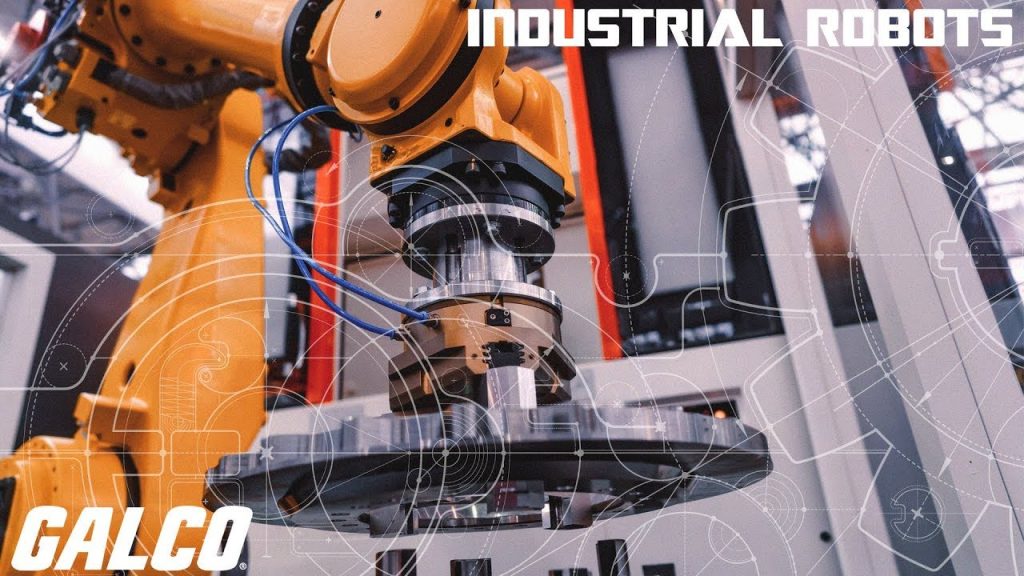
Lastly, we have the articulated geometry, which is the most versatile and widely used type of robotic arm geometry. Articulated robots have multiple joints that mimic the movements of a human arm. This geometry allows for a wide range of motions and is suitable for complex tasks that require precise positioning, such as assembly or welding.
Each type of robotic arm geometry has its own strengths and limitations, and choosing the right geometry depends on the specific requirements of the application. Industrial robots can be further classified based on their payload capacity, reach, and other specifications, making it important to consider these factors when selecting the right robot for your business.
In conclusion, understanding the four main types of robotic arm geometry is essential for businesses in the manufacturing industry. Whether it’s the Cartesian, cylindrical, polar, or articulated geometry, each type offers unique advantages for different applications. By selecting the right geometry and type of industrial robot, businesses can enhance their productivity and achieve greater efficiency in their operations.
So, if you’re looking for a professional solution for your coil packing needs, be sure to check out the leading manufacturer in the industry. They offer a wide range of coil packing solutions that are tailored to meet your specific requirements. Don’t miss out on the opportunity to optimize your operations and improve your overall efficiency. Visit their website today and explore the possibilities of industrial robot types in your business. Industrial Robot
“Exploring Robotic Arm Geometry: Understanding Engineering Basics and Industrial Robot Types”