
Title: “Efficient and Reliable Automated Coil Packing Line | Steel Coil Packing Line Manufacturer”
Description:
Introduction:
Welcome to our informative video on the Automated Coil Packing Line, a cutting-edge solution designed to streamline the packaging process of steel coils. In this video, we will delve into the features, benefits, and operation steps of this automatic steel coil packing line.
Video Content:
Our Automated Coil Packing Line, developed by FHOPE, offers a highly efficient and reliable solution for packaging steel coils. With advanced technology and precision engineering, this system ensures optimal coil protection, secure packaging, and improved productivity.
Key Features:
– High-speed and fully automated operation for enhanced efficiency
– Customizable settings to accommodate various coil sizes and specifications
– Integrated control system for seamless coordination between different components
– Robust construction and durable materials to withstand harsh industrial environments
– Versatile packaging options, including stretch wrapping, strapping, and labeling
– Advanced safety features to protect both operators and equipment
Benefits:
1. Increased Productivity: The Automated Coil Packing Line significantly reduces manual labor, increasing throughput and overall productivity. This enables your business to handle higher coil volumes effectively.
2. Enhanced Coil Protection: Our system ensures that steel coils are tightly wrapped and securely packaged, minimizing the risk of damage during transportation and storage. This helps maintain the quality and integrity of your products.
3. Improved Efficiency: By automating the packaging process, the coil packing line eliminates human errors and inconsistencies, improving overall efficiency and reducing downtime.
4. Cost Savings: The Automated Coil Packing Line reduces reliance on manual labor, leading to cost savings in the long run. Additionally, the system optimizes material usage, minimizing waste and reducing operational expenses.
Operation Steps:
1. Coil Loading: The steel coils are loaded onto the conveyor system, which automatically feeds them into the packing line.
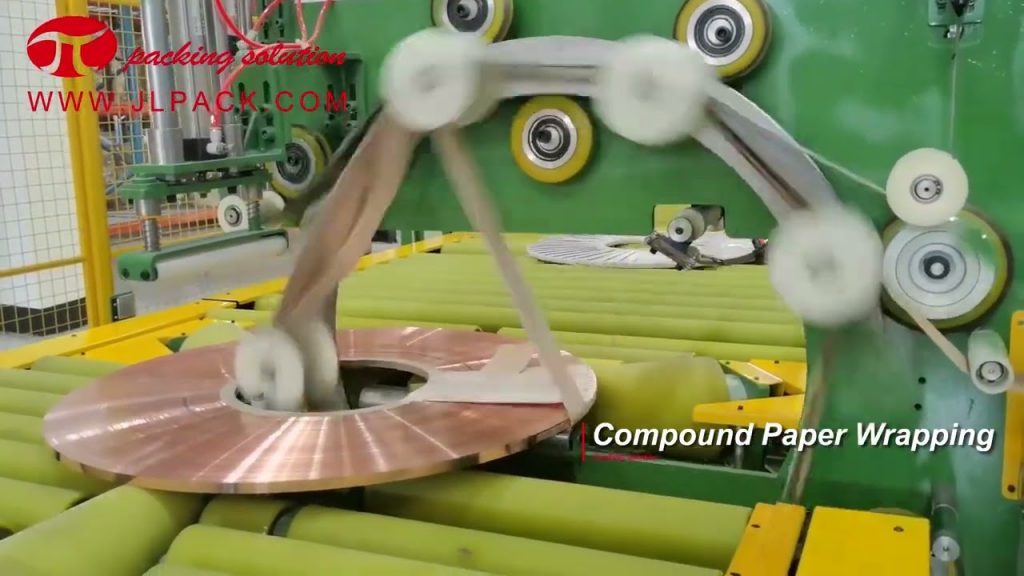
2. Wrapping and Securing: The system applies stretch film or other packaging material around the coil, ensuring proper tension and stability. Optional strapping or labeling can also be incorporated as per requirements.
3. Quality Control: The Automated Coil Packing Line includes built-in sensors and monitoring systems to ensure consistent and reliable packaging quality.
4. Output and Stacking: Once packaged, the coils are discharged from the system and can be automatically stacked for further handling or shipping.
Call to Action:
If you are looking for an efficient and reliable solution to automate your steel coil packaging process, the Automated Coil Packing Line by FHOPE is the answer. Don’t forget to like, subscribe, and share this video to stay updated with the latest innovations in the industry.
Additional Tags and Keywords:
Automated coil packing line, Automatic steel coil packing line, Coil packaging solution, Steel coil packaging, Coil wrapping machine, Coil strapping machine, Industrial packaging equipment.
Hashtags:
#AutomatedCoilPackingLine #SteelCoilPacking #PackagingAutomation #FHOPE #IndustrialPackaging
A tilter for an automatic steel coil packing line is a crucial component that helps in the efficient and safe handling of steel coils during the packing process. Here’s an example of a tilter for an automatic steel coil packing line using the FHOPE system:
“`python
# Import necessary libraries
import time
class Tilter:
def __init__(self):
self.angle = 0 # Current angle of the tilter
self.max_angle = 90 # Maximum allowed angle for tilting
self.min_angle = 0 # Minimum allowed angle for tilting
def tilt_up(self):
if self.angle < self.max_angle:
self.angle += 10
print("Tilting up to angle:", self.angle)
time.sleep(1) # Simulating the time taken for tilting
else:
print("Cannot tilt up beyond the maximum angle")
def tilt_down(self):
if self.angle > self.min_angle:
self.angle -= 10
print(“Tilting down to angle:”, self.angle)
time.sleep(1) # Simulating the time taken for tilting
else:
print(“Cannot tilt down beyond the minimum angle”)
def reset(self):
self.angle = 0
print(“Tilter reset to initial position”)
# Example usage
tilter = Tilter()
tilter.tilt_up()
tilter.tilt_up()
tilter.tilt_up()
tilter.tilt_down()
tilter.tilt_down()
tilter.reset()
“`
In this example, the `Tilter` class is defined with methods for tilting up, tilting down, and resetting the tilter to its initial position. The `tilt_up()` method increments the `angle` attribute by 10 degrees, simulating the tilting up process. Similarly, the `tilt_down()` method decrements the `angle` attribute by 10 degrees, simulating the tilting down process. The `reset()` method sets the `angle` attribute back to 0, simulating the tilter being reset to its initial position.
This tilter can be integrated into an automatic steel coil packing line using the FHOPE system to ensure efficient and safe handling of steel coils during the packing process. coil packing line
#Automatic #steel #coil #packing #line #FHOPE