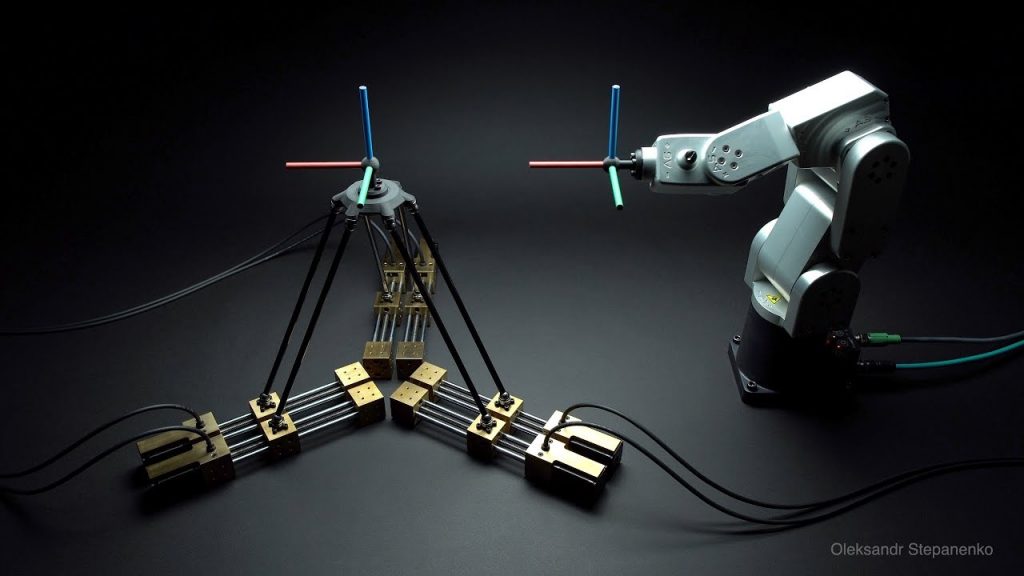
Check out the latest video on YouTube that explores the fascinating concept of Six degrees of freedom (6DOF) achieved in two completely different ways. This video delves into the serial architecture of the world’s smallest industrial robot and its applications in various industries.
In this article, we will provide an overview of the video’s content and highlight the importance of 6DOF in industrial robot applications. We will also discuss the differences between serial and parallel robots, focusing on their kinematics and real-world applications.
The video showcases the incredible capabilities of a small industrial robot with a serial architecture. This type of robot offers six degrees of freedom, allowing it to move in a wide range of directions and perform complex tasks with precision. With its compact size, this robot can be easily integrated into various industrial settings, making it an ideal choice for automation.
Serial robots are known for their flexibility and versatility. They can be programmed to perform a wide range of tasks, from simple pick-and-place operations to more intricate assembly processes. The video demonstrates how this robot can handle objects with utmost precision, showcasing its potential in industries such as manufacturing, packaging, and assembly.
On the other hand, the video also explores the concept of parallel robots and their kinematics. While serial robots have a single arm, parallel robots consist of multiple arms connected to a common base. This unique design allows parallel robots to achieve high speeds and handle heavy loads. However, their range of motion is limited compared to serial robots.
The article emphasizes the importance of understanding the differences between serial and parallel robots to determine the most suitable solution for specific industrial applications. Depending on the requirements of a particular task, either type of robot can offer distinct advantages.
Industrial Robot Applications play a crucial role in enhancing productivity and efficiency in various industries. By automating repetitive and labor-intensive tasks, these robots can improve production speed, accuracy, and consistency. They also contribute to a safer work environment by reducing the risk of human errors and injuries.
To conclude, this YouTube video provides valuable insights into the world of Six degrees of freedom (6DOF) achieved through different robot architectures. By showcasing the capabilities of a small industrial robot with a serial architecture, the video highlights the potential applications in various industries. Additionally, it explores the differences between serial and parallel robots, offering valuable knowledge for those seeking the most suitable automation solution.
Check out the video now to learn more about the fascinating world of industrial robot applications and discover the possibilities offered by the 6DOF concept. Industrial Robot
“Comparing Kinematics: Serial Robots vs. Parallel Robots | Real-Life Demo of Industrial Robot Applications”