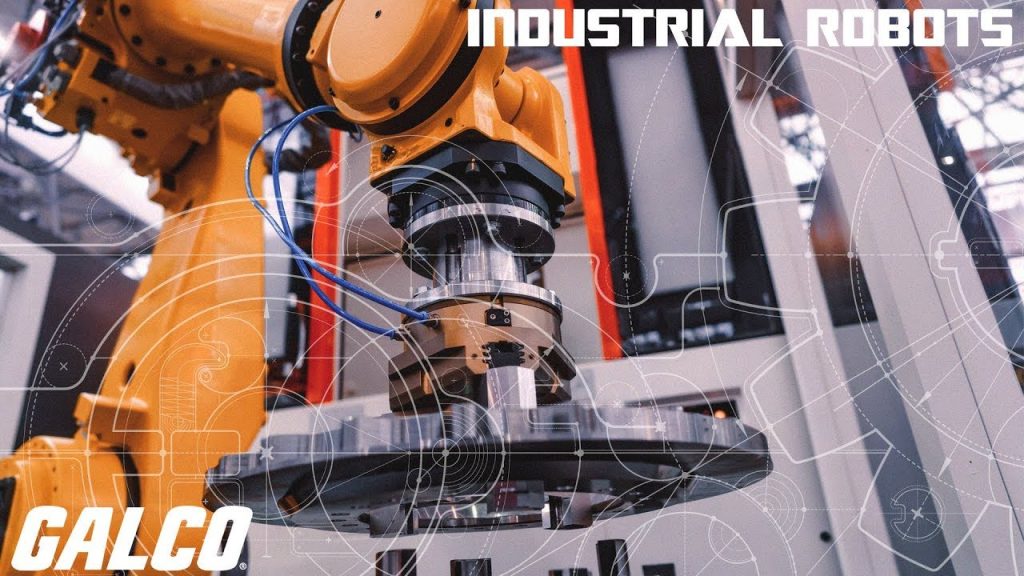

Industrial robots have revolutionized the manufacturing industry by automating various tasks and improving efficiency. These robots are designed to perform repetitive and complex tasks with precision and accuracy. In this YouTube video article, we will explore the different types of industrial robots and delve into the fascinating world of kinematic structures.
Industrial robots come in various types, each with its unique capabilities and applications. These robots are categorized based on their mechanical structure and the tasks they are designed to perform. Understanding the different types of industrial robots is crucial for businesses looking to optimize their manufacturing processes.
One of the most common types of industrial robots is the Cartesian robot. Also known as gantry robots, Cartesian robots have a three-dimensional rectangular coordinate system. These robots are ideal for applications that require precise movements in a straight line or along a predefined path. Cartesian robots are widely used in industries such as packaging, material handling, and assembly.
Another type of industrial robot is the SCARA robot. SCARA stands for Selective Compliance Assembly Robot Arm. These robots have a rigid arm with two parallel joints that allow for vertical and horizontal movements. SCARA robots are commonly used in assembly and pick-and-place operations. Their ability to perform tasks with high speed and accuracy makes them suitable for applications in the electronics and automotive industries.
The third type of industrial robot is the articulated robot. This type of robot consists of multiple rotary joints, mimicking the movements of a human arm. Articulated robots have a high degree of freedom, making them versatile for various applications. These robots are often used in welding, painting, and material handling tasks. Their ability to reach narrow and confined spaces makes them indispensable in industries such as automotive and aerospace.
Delta robots, also known as parallel robots, are another type of industrial robot. These robots have a unique design with three arms connected to a common base. Delta robots are known for their high-speed capabilities, making them ideal for applications that require rapid and precise movements. They are commonly used in food and beverage packaging, pharmaceuticals, and electronics industries.
Lastly, we have the cylindrical robot, which has a single rotary joint. These robots are primarily used for handling cylindrical objects such as pipes, tubes, and bottles. Cylindrical robots are widely employed in industries such as packaging, material handling, and assembly.
Kinematic structures play a crucial role in the design and functionality of industrial robots. The kinematic structure of a robot determines its range of motion and the tasks it can perform. Understanding the kinematic structure of a robot is essential for optimizing its performance and efficiency.
In conclusion, industrial robots have revolutionized the manufacturing industry by automating tasks and improving efficiency. Understanding the different types of industrial robots, such as Cartesian, SCARA, articulated, delta, and cylindrical robots, is crucial for businesses looking to enhance their manufacturing processes. Additionally, having a clear understanding of kinematic structures is essential for optimizing the performance of industrial robots.
Check out the video to learn more about industrial robot types and the fascinating world of kinematic structures. Enhance your manufacturing processes and stay ahead in the competitive market with the right industrial robot solution.
Check the coil packing solution with leading manufacturers for professional solutions today! Industrial Robot
“Exploring Industrial Robot Kinematic Structures and Types: Lecture 2.3 Briefing on the Mechanics and Varieties of Robotics”